Unicorn in a Cup: A Designer’s Real-World Embroidery Review
Let’s be honest—I opened Unicorn in a Cup expecting charm, not conviction. But after stitching it onto a linen tea towel for a boutique kitchen gift set, then testing it again on a baby onesie and a structured cotton tote, I realized this isn’t just another whimsical graphic. It’s a quietly thoughtful machine embroidery design that earns its place in real projects—not just digital previews.
First Impressions: Sweet, Not Cloying
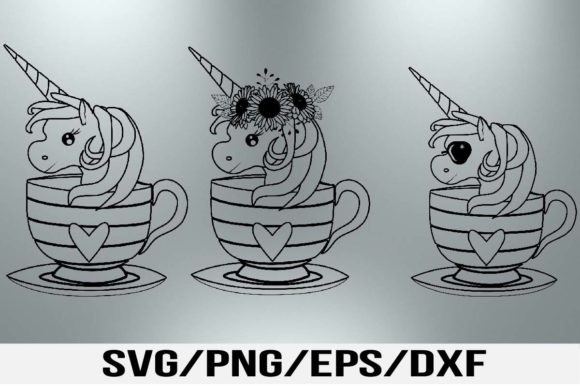
The moment you preview Unicorn in a Cup, it lands with soft confidence. The unicorn isn’t overly detailed or cartoonish—it’s simplified but expressive, with gentle curves, a compact horn, and a cup held like a quiet secret. There’s no cluttered background, no forced glitter, no tiny stars begging to vanish under thread. That intentional minimalism is what makes it work so well as a graphics asset: it breathes on fabric instead of fighting it.
This isn’t a design screaming for attention at a craft fair. It’s the kind of embroidered patch or tote bag design that makes someone pause, smile, and say, “I need that.” It leans into warmth and wonder without tipping into nostalgia overload—perfect for modern nursery decor, handmade coffee shop merch, or personalized holiday gifts.
Where It Shines (and Where It Asks for Care)
I used Unicorn in a Cup across six real product types: a medium-weight cotton apron, a brushed poly-cotton baby onesie, a structured twill cap, a lightweight linen pillow cover, a looped terry kitchen towel, and a 100% cotton sweatshirt. Here’s how it held up:
- On stable, medium-weight fabrics (like the apron and sweatshirt), the stitch clarity was excellent—no skipped satin stitch edges, no fill stitch pooling. The shape stayed crisp, even at 3.5" wide.
- On thin or stretchy fabric (the onesie), I added tear-away + cut-away stabilizer combo—and it performed cleanly. But I’d avoid using it below 2.75" on anything lighter than 4.5 oz cotton; tiny horn details softened slightly at smaller scales.
- On textured surfaces (the terry towel), I reduced stitch density by ~12% and extended the underlay. Result? Still legible, still charming—but don’t expect sharp line work on heavy loops. This is a holiday embroidery piece, not a fine-detail monogram.
- On curved surfaces (the cap front), I repositioned the cup handle to sit parallel to the bill curve. Small tweak, big payoff—no distortion, no puckering. Just remember: test hoop placement first.
It’s not built for dense blackwork or photorealistic shading. You won’t find complex fill gradients or micro-stitched manes. What you *will* get is balanced stitch density, logical jump stitch paths, and generous spacing between elements—so your machine doesn’t stall and your finished product looks intentionally handmade, not rushed.
What It Adds to Your Craft Business
If you’re an Etsy seller, small shop owner, or digital embroidery file creator, Unicorn in a Cup does quiet brand work. It reads as joyful but grounded—ideal for shops selling handmade baby items, mindful kitchen goods, or boutique apparel. Customers recognize sincerity faster than sparkle. When stitched on a cream-colored linen tea towel with pale mint thread, it felt like a gift someone would keep for years—not just display once.
That translates directly to customer trust. A clean, well-structured embroidery file signals professionalism. It tells buyers your process is considered—not just “upload and stitch.” And because the composition is centered and self-contained, it works equally well as a standalone personalized gift or as part of a coordinated set (e.g., matching mug + towel + onesie).
For commercial embroidery clients—say, a local café wanting branded staff aprons—it holds up beautifully at scale and maintains readability from 3 ft away. No visual noise. No competing elements. Just one clear, friendly focal point.
Practical Designer Notes Before You Stitch
Before adding Unicorn in a Cup to your next embroidery project, here’s what I did—and what I’d recommend you do too:
- Test on scrap fabric first—especially if using textured, dark, or stretchy materials. See how the cup rim reads in your thread palette.
- Check thread color contrast: light thread on dark fabric needs slightly heavier satin stitch coverage; dark thread on light fabric benefits from tighter fill stitch spacing.
- Confirm hoop size compatibility: the widest version fits comfortably in a 4x4 hoop, but verify your own machine’s max dimensions before scaling.
- Inspect small details in your embroidery software—especially the unicorn’s eye and horn tip. They’re simple, but critical for expression.
- Try black-and-white mockups before finalizing colors. This design relies on shape and rhythm more than hue—so grayscale tests reveal clarity issues fast.
- Use proper stabilizer: medium cut-away for knits, tear-away for stable wovens, and fused + tear-away for towels or napkins.
- Review licensing: since this is sold as a Graphic Templates asset, confirm whether your intended use—especially resale of finished embroidered items or bundling into digital kits—is covered.
Final Thought: A Design That Serves the Maker
Unicorn in a Cup doesn’t try to be everything. It doesn’t mimic watercolor texture or replicate glitter foil. Instead, it respects the limits and strengths of thread, needle, and fabric—and gives back clarity, consistency, and quiet delight. Whether you’re stitching it for a baby shower gift, a small-batch Etsy listing, or a custom sweatshirt embroidery order, it arrives ready to support your voice—not drown it in trend.
It’s proof that the best design assets aren’t the flashiest. They’re the ones that stitch true, sell well, and make your customers feel seen—cup and all.