Coffee Cup and Winter Spices
A Designer’s First Look: Warm, Inviting — But Is It Embroidery-Ready?
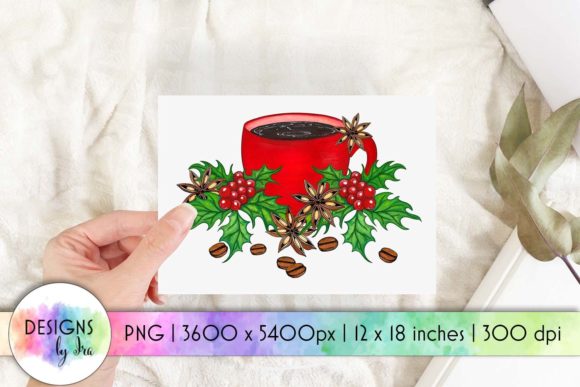
When Coffee Cup and Winter Spices landed in my inbox, I paused mid-scroll. Not because it’s flashy — it’s not — but because it *feels* like a quiet invitation: cozy, seasonal, and grounded in real-life making. The composition centers a stylized coffee cup surrounded by cinnamon sticks, star anise, whole cloves, and a dusting of nutmeg — all arranged with gentle asymmetry and soft negative space. It reads as a sublimation design first (which makes sense, given the PNG delivery), but as an embroidery designer, my brain immediately started translating: Where would the satin stitch hug that cup rim? How much fill stitch would those spices need? Will the stems read at 3 inches tall on a baby onesie?
Where This Design Truly Shines — And Why
I recently used Coffee Cup and Winter Spices to develop a small-batch holiday collection for my local craft shop: embroidered linen tea towels, heavyweight cotton tote bags, and unisex crewneck sweatshirts. It worked beautifully on all three — but for different reasons.
- Tea towels: The clean lines and open layout let the natural fabric texture show through between stitches. A light stabilizer + medium-density fill stitch kept the spices legible without stiffness.
- Tote bags: At 5–6 inches wide, the design scaled up without losing charm. Customers responded strongly to its warmth — one buyer told me she gifted it to her barista friend “because it felt handmade, not mass-produced.” That’s the handmade product magic Coffee Cup and Winter Spices delivers when executed well.
- Sweatshirts: On brushed fleece, I reduced stitch density slightly and added a tear-away + cut-away hybrid stabilizer. The cup’s rounded shape translated smoothly; the spices stayed distinct, not muddy.
Real-World Limits — Where Caution Is Essential
This isn’t a one-size-fits-all embroidery file. Its strengths are also its boundaries. Here’s where I recommend stepping back — or adapting:
- Small hoop sizes (under 4 inches): The spice cluster is dense enough that shrinking below ~3.5 inches risks losing definition in the clove tips or star anise points. Not ideal for baby embroidery on tiny bibs or cap fronts without simplification.
- Thin or highly textured fabrics: On lightweight rayon or heavily napped terry cloth, fine details can vanish. I’d avoid it for delicate baby onesies unless paired with precise underlay and ultra-fine thread.
- Dark fabric backgrounds: Since the PNG has a transparent background, you’ll need to choose your base color intentionally. On black or navy, consider adding a subtle white underlay layer beneath key elements — especially the cup’s steam or spice highlights — to maintain contrast.
- Curved surfaces (like structured caps): The cup’s vertical orientation works best on flat or gently contoured areas. Avoid placing it directly over the crown seam unless you’re confident in your digitizing adjustments or using a flexible applique design variation.
What It Adds to Your Craft Business — Beyond the Stitch
As an Etsy seller and small shop product developer, I pay attention to how a design affects perceived value and buyer trust. Coffee Cup and Winter Spices consistently lifts both. Its theme is evergreen (pun intended) for fall and winter gifting, but it avoids cliché — no snowflakes, no cartoonish mugs. That subtlety tells customers you care about design integrity, not just seasonal trends. When paired with quality stitching and thoughtful presentation (think kraft gift tags + cinnamon-scented tissue), it becomes a personalized gift that feels intentional, not templated.
For commercial embroidery shops, this design integrates cleanly into existing workflows. It doesn’t demand excessive trims or color changes — a practical win for volume orders. And because it’s delivered as a high-res PNG (12 x 18 inches, 300 dpi), it serves double duty: use it as-is for sublimation projects, or hand-digitize it for machine embroidery design work with full control over stitch types — satin stitch for the cup, running stitch for subtle steam, fill stitch with varied angles for organic spice texture.
Five Practical Notes Before You Stitch
- Always test on scrap fabric first — especially if you’re pairing it with new thread colors or stabilizers. What reads clearly on screen may shift in stitch density or sheen.
- Review thread color contrast carefully. Cinnamon and nutmeg aren’t brown — they’re warm reds, ochres, and greys. Choose thread palettes that honor that nuance, not generic “brown” defaults.
- Confirm your intended hoop size matches the design’s natural proportions. This isn’t a 1-inch pocket patch design — it breathes best at 4–7 inches wide.
- Inspect small details at actual stitch size. Zoom in on the PNG and ask: “Will this stem hold up at 12x magnification on my embroidery software?” If not, simplify before digitizing.
- Check licensing terms before selling finished items or digital embroidery files. This is a Graphics asset — confirm whether resale rights apply to your specific use case, especially for Etsy listings or craft fair products.
Final Thought: A Quiet Workhorse, Not a Showstopper
Coffee Cup and Winter Spices won’t shout from a crowded craft fair table — and that’s its strength. It’s a reliable, mood-rich design for makers who value cohesion over clutter. It fits naturally into kitchen-themed boutiques, teacher appreciation bundles, small-batch apparel lines, and holiday collections where warmth and authenticity matter more than trend-chasing. As a Crafts-focused design, it bridges digital flexibility and tactile execution — but only if you meet it halfway with smart stabilizing, thoughtful scaling, and respect for its quiet, spiced-up soul.